The Regime Investor· · ·8 min read
Can a Rooming House Really Earn a 10% Return?
Test an Australian rooming-house investment after vacancy, utilities, management, compliance, finance and exit costs, and separate property ownership from an operator business.
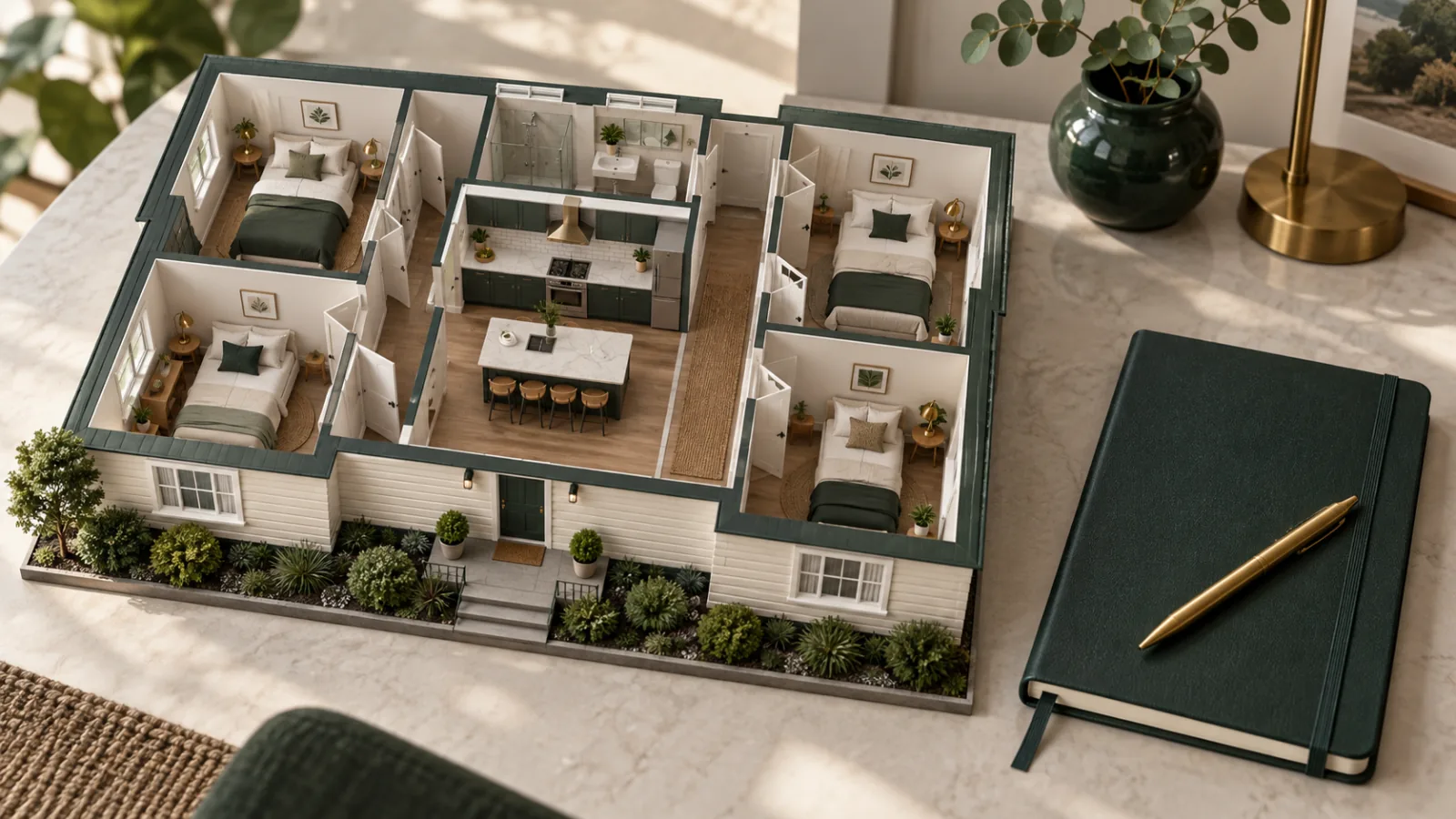
A rooming house can show a striking gross rental yield because several residents pay separately for rooms in one property. That arithmetic is real, but it is only the top line. The investor still has to pay for vacancies, utilities, cleaning, management, insurance, maintenance, compliance, finance and eventual exit.
The result should be tested as both a property and an operating business. This article extends our guide to Australian housing returns after costs by adding the rules and operating demands that make a rooming house different from an ordinary rental.
Start with gross rent, then subtract every operating cost
Suppose seven rooms rent for A$275 a week and average occupancy is 92%. The potential annual rent is A$100,100, but collected rent falls to about A$92,100 before expenses. That is the beginning of the calculation, not the result.
Subtract electricity, water and internet if the operator pays them. Then subtract cleaning, consumables, garden work, routine repairs, management, advertising, bad debts, insurance, council charges and recurring compliance costs. For this worksheet, the amount left before finance and income tax is operating income. Keep a separate cash allowance for replacing furniture and appliances: setting money aside is not the same as incurring an expense.
Continue the same hypothetical property at an A$900,000 purchase-and-fit-out cost. The annual costs below are invented worksheet inputs, not local quotes, typical rooming-house expenses or figures from the source video. Replace them with property-specific evidence. All rent due for occupied rooms is assumed to be collected; no separate bad-debt allowance is included.
| Annual line | Hypothetical amount |
|---|---|
| Potential rent: 7 × A$275 × 52 | A$100,100 |
| Occupancy allowance: 8% | −A$8,008 |
| Rent collected | A$92,092 |
| Utilities and internet | −A$9,000 |
| Management, advertising and letting | −A$9,200 |
| Cleaning, garden work and consumables | −A$5,000 |
| Routine repairs and recurring compliance costs | −A$4,500 |
| Insurance and property charges | −A$4,400 |
| Operating income before finance and income tax | A$59,992 |
| Furniture/appliance replacement cash reserve | −A$2,000 |
| Cash after that reserve, before finance and income tax | A$57,992 |
Operating costs total A$32,100. The operating yield is about 6.7% of the A$900,000 cost; after the replacement reserve, the cash yield is about 6.4%, compared with 11.1% potential gross rent. These are three different measures, not three estimates of the same return. The reserve remains cash held for future spending.
Add any missing property-specific charges, acquisition and initial approval costs, owner labour, financing and tax before calling this an investor return. Upfront costs increase the capital committed; interest and principal repayments change cash available to the owner. Do not deduct an expense twice if a management package already includes it.
Occupancy is not one number
A conventional lease may lose all rental income when it is vacant. A rooming house can lose one room at a time, which looks diversified. Yet resident turnover, collection problems and repeated letting costs can be higher.
Model occupancy by room and by month. Include the time between residents, incentives, unpaid rent and rooms taken offline for repair. A property that remains 95% occupied in a spreadsheet may perform differently if several rooms turn over around university or seasonal work calendars.
The useful stress test is not merely 90% versus 100% occupancy. It is the combined effect of lower rent, slower re-letting and higher variable costs.
Regulation changes the cost base
In Victoria, a rooming house is generally a building where four or more people can live in separately rented rooms. Consumer Affairs Victoria’s minimum-standards guide says the premises must be registered with the local council and must meet room, bathroom, water, smoke-alarm, heating and safety requirements.
The operator also needs the appropriate licence, while each premises still requires council registration. The operator guidance requires the licence to be displayed, the property to be advertised as a rooming house, resident records to be kept and minimum standards to be maintained.
Planning, building classification, occupancy limits and fire-safety work can depend on the property and council. A normal house with extra locks is not automatically a compliant rooming house. Written confirmation from the relevant authorities belongs in the feasibility, not after settlement.
Existing-house conversion and a new package carry different risks
An existing-house conversion lets the investor inspect the land, street and comparable sales before committing to the fit-out. The main risks are hidden building work, approval cost, room layout and an appraisal that does not recognise every dollar spent.
A new rooming-house package may provide a purpose-built layout and clearer construction scope. It can also embed a developer margin and create local supply concentration if many similar properties are delivered together. A specialised design may attract room income while having a narrower resale market.
Compare each option with the value of the property as an ordinary dwelling. The gap is the amount of capital that depends on continued rooming-house use.
Ownership and a long-lease operator are not the same investment
In the ownership model, the investor buys the land and building, funds the conversion and receives the room income. The investor bears property prices, debt, compliance and operating costs, but retains the asset and sale option.
In an operator model, the operator leases a property from an owner, pays for some fit-out and sublets rooms. The initial capital can be lower and the reported payback faster because the operator does not buy the property. In exchange, there is no land appreciation and the business depends on the head lease.
The operator must test rent reviews, repair responsibility, licences, subletting consent, assignment, early termination, make-good obligations, including who must pay to restore the property, and what happens to the fit-out at lease end. A 20-year headline term is not 20 years of guaranteed profit.
Finance can erase a large part of the yield spread
Lenders may value a specialised property conservatively or assess its income differently from a standard residential tenancy. A lower valuation raises the investor’s equity requirement even if the advertised purchase price is unchanged.
Compare net operating income with interest under at least three rate settings. Also model principal repayments, because cash available to the owner can be lower than accounting income. The investment should still be workable if the lender recognises only conventional residential value and if refinancing terms tighten.
Labour belongs in the return calculation
Self-management can make the cash result look stronger than professional management. That difference is often compensation for the owner’s time, availability and business responsibility.
Record hours spent on enquiries, inspections, conflict, arrears, safety records, cleaning coordination and maintenance. Price those hours at a realistic rate. If the project only clears its minimum required return when the owner’s labour is treated as free, it is partly a job rather than passive property income.
The exit test should come before the yield claim
Ask who can buy the property later and what evidence a valuer will use. A future buyer may want a standard home, an income property or an operating business. Each buyer values different parts of the asset.
Check ordinary-home comparable sales, rooming-house transactions, approvals, transferable licences, lease history and the cost of reversing the layout. Do not assume that a 10% gross yield automatically produces a premium sale price.
A decision-ready rooming-house worksheet
Before relying on the headline return, collect:
written planning, building, council-registration and operator-licensing requirements;
signed room rents or independent local evidence, not advertised maxima;
monthly occupancy and turnover assumptions;
a complete utilities, management, maintenance and compliance budget;
lender valuation and loan terms;
owner labour or professional-management cost;
ordinary-dwelling and specialised resale values; and
downside cases for rent, occupancy, rates and capital expenditure.
A rooming house can be a viable cash-flow property or a viable accommodation business. It is not automatically both. The investment case is strongest when the net return survives regulation, paid management and a conservative exit value.
Sources
케빈장 - 호주 부동산 투자: Rooming House 수익률 10% 가능할까?|New Build·기존주택·20년 Lease 직접 비교 — 26 August 2026, Korean-language discussion of ownership, conversion and long-lease operation. Its feasibility examples are assumptions to examine, not verified market returns. The expense table above is this publication’s separate hypothetical illustration.
Consumer Affairs Victoria: Rooming-house minimum standards
Consumer Affairs Victoria: Running a rooming-house business
Consumer Affairs Victoria: Rooming-house operator licensing scheme
This article provides general information only. It is not personal financial, legal, tax or property advice. In the linked video, the presenter promotes consultations and discusses a property-investment coaching programme and analysis software under development. That creates a commercial-interest context for the source; its return examples are treated only as assumptions to test. The publisher and author have no disclosed holding, sponsorship or affiliate relationship connected with the properties discussed.
Update note
Revision history
More through this lens